- People
- Expertise
Our expertise
We are a team of more than 600 professionals, with the depth of experience which makes us genuine experts in our fields. Together, gunnercooke’s people have strength across just about every corporate discipline and sector. We provide legal, commercial and strategic advice that delivers real value to the clients we work with, which span from multinational enterprises through to not-for-profit organisations. Our breadth of expertise also covers specialist and emerging disciplines charity, crypto, sports and competition law.
Search by practice areaDispute ResolutionDispute Resolution OverviewMeet the Dispute Resolution TeamIntellectual Property DisputesFinancial Services & FinTech OverviewProceeds of CrimeEmployment TribunalTax InvestigationProperty Dispute ResolutionInsolvency DisputesMediationCivil Fraud & Asset TracingHealth & SafetyBusiness Crime & InvestigationsLitigation & ArbitrationInternational Arbitration - International
International Offices
The gunnercooke group has 16 main global offices across England, Scotland, the US, Germany and Austria, with further plans for growth in the coming years. These offices enhance the existing in-house capability of our dedicated international teams and dual-qualified experts that cover Spain, France, Italy, Portugal, Brazil, China, India, Poland and Hungary. Our team have clients across 126 jurisdictions, speak 46 languages and are dual-qualified in 22 jurisdictions. Our expertise means we can offer large teams to carry out complex cross-border matters for major international clients.
- Our story
Our story
gunnercooke is a top commercial law firm. We comprise a rapidly growing number of experts spanning legal and other disciplines. Clients benefit from flexible options on fees to suit their needs, access to a wider network of senior experts throughout the relationship, and legal advice which is complemented by an understanding of the commercial aspects of running a business.
- Reading Room
- News & Insights
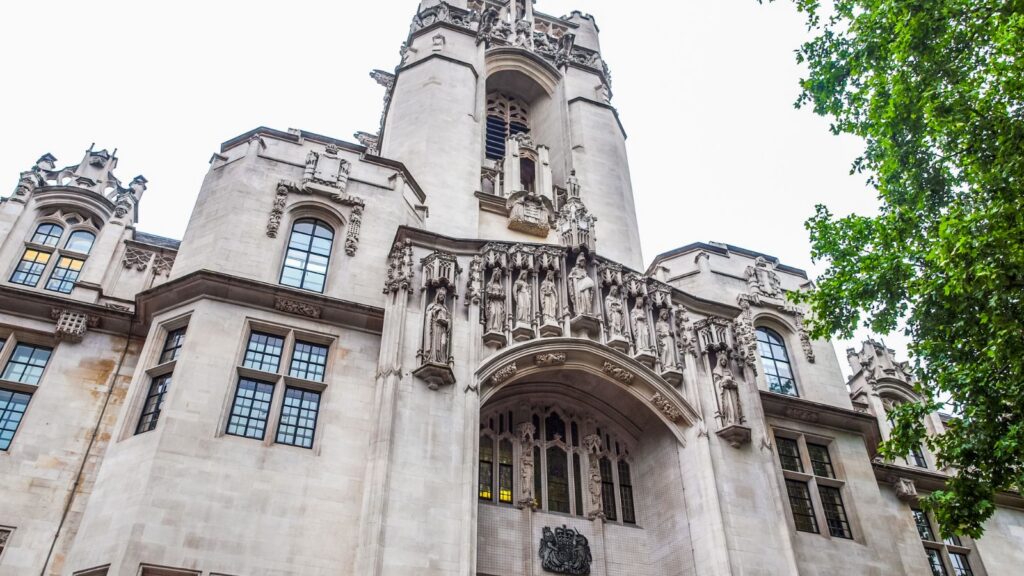
Can the “right to life” stop a news story?
The case in brief
A High Court case this month asks an unusual question: can someone stop a news story from being published because they say it would put their life at risk?
In PPT v Independent Television News Limited & Anor, a claimant known only as “PPT” is seeking to restrain ITN and Guardian News & Media from publishing material about his conduct, which they investigated over several years. He disputes the allegations.
On 9 October 2026, Mr Justice Nicklin ruled that PPT’s identity should stay hidden for now but refused to hide the identities of the two media organisations. Nicklin made it clear that this ruling “does not determine the substantive merits of the claim”. The question of whether the story can be published was heard at trial on 27 and 28 October, and judgment has been reserved.
Why this case is different
People who challenge publication usually argue it breaches their right to a private life (Article 8 of the European Convention on Human Rights). The court then weighs that against the media’s right to freedom of expression (Article 10).
PPT’s main argument is different, he says fear of the allegations becoming public has already led him to attempt suicide more than once, and that publication would put his life at serious and immediate risk. That engages the right to life (Article 2), with privacy as a back-up.
- This matters because privacy can be outweighed by the public interest in exposing wrongdoing. Courts have generally treated the right to life as carrying much greater weight than privacy, with some holding it cannot be outweighed by newsworthiness at all once a real and immediate risk is shown.
Has this been tried before?
Courts have used the right to life to protect identities before, most notably for the killers of James Bulger, where there was compelling evidence of a genuine risk of vigilante violence. Cases about self-harm, rather than violence from others, are much rarer.
In GMC v X [2019], several psychiatrists agreed a doctor faced a serious and ongoing suicide risk, and the court ruled that naming him would breach his right to life. But in EGC v PGF NHS Trust [2022], heard by the same judge now hearing PPT’s case, similar evidence fell well short. Courts will only accept this argument where the medical evidence is overwhelming, not just a single report or the claimant’s own say-so.
What this could mean
This is genuinely difficult territory, and it deserves to be treated carefully in both directions. The psychological toll of publicity of serious allegations can be severe, and well-evidenced claims of serious psychiatric harm, including suicide risk, should be taken seriously. At the same time, if the evidential bar were ever set too low, there is a real risk of a chilling effect on legitimate investigative journalism. The case will also test the delicate question of whether evidence of a mental health crisis can properly support a permanent injunction, or whether protection should only be time-limited and reviewable.
Key takeaways
- Claimants with credible medical evidence of a real and immediate risk to life may have a route to challenging threatened publications.
- Publishers facing this argument should expect the evidence behind it to be properly tested by the Court, not simply accepted at face value.
- Both sides benefit from early, specialist advice. Whether you are facing potential exposure or are a publisher managing a pre-publication challenge, getting experienced legal advice early helps ensure the right evidence and arguments are in place from the outset.
What to do next
If you are facing a potential publication, or you are a publisher dealing with a pre-publication challenge, contact Jane Ashford-Thom for a confidential conversation.
If you have been affected by any of the issues in this article, Samaritans is available 24 hours a day on 116 123.
To receive all the latest insights from gunnercooke to your inbox, sign up below