- People
- Expertise
Our expertise
We are a team of more than 600 professionals, with the depth of experience which makes us genuine experts in our fields. Together, gunnercooke’s people have strength across just about every corporate discipline and sector. We provide legal, commercial and strategic advice that delivers real value to the clients we work with, which span from multinational enterprises through to not-for-profit organisations. Our breadth of expertise also covers specialist and emerging disciplines charity, crypto, sports and competition law.
Search by practice areaDispute ResolutionDispute Resolution OverviewMeet the Dispute Resolution TeamIntellectual Property DisputesFinancial Services & FinTech OverviewProceeds of CrimeEmployment TribunalTax InvestigationProperty Dispute ResolutionInsolvency DisputesMediationCivil Fraud & Asset TracingHealth & SafetyBusiness Crime & InvestigationsLitigation & ArbitrationInternational Arbitration - International
International Offices
The gunnercooke group has 16 main global offices across England, Scotland, the US, Germany and Austria, with further plans for growth in the coming years. These offices enhance the existing in-house capability of our dedicated international teams and dual-qualified experts that cover Spain, France, Italy, Portugal, Brazil, China, India, Poland and Hungary. Our team have clients across 126 jurisdictions, speak 46 languages and are dual-qualified in 22 jurisdictions. Our expertise means we can offer large teams to carry out complex cross-border matters for major international clients.
- Our story
Our story
gunnercooke is a top commercial law firm. We comprise a rapidly growing number of experts spanning legal and other disciplines. Clients benefit from flexible options on fees to suit their needs, access to a wider network of senior experts throughout the relationship, and legal advice which is complemented by an understanding of the commercial aspects of running a business.
- Reading Room
- News & Insights
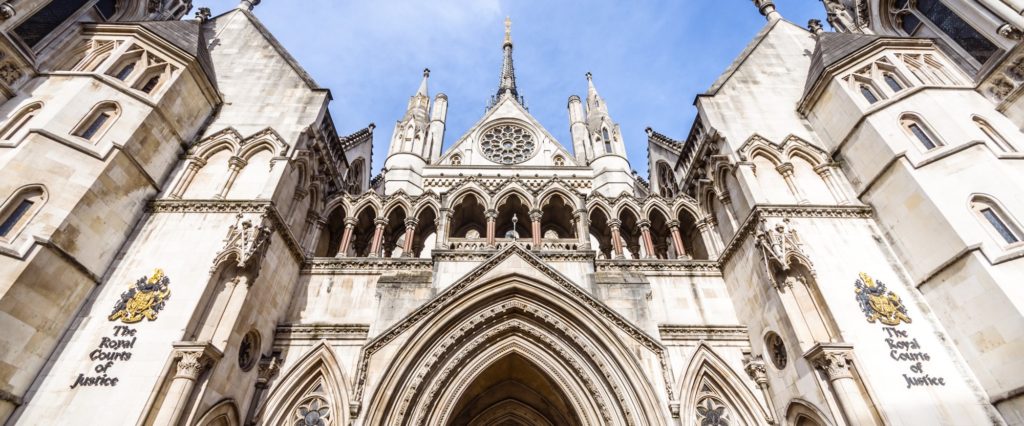
On 31 March 2026, the Court of Appeal handed down its judgment in CILEX v Mazur and others [2026] EWCA Civ 369. The Court held that an unauthorised person such as a paralegal, trainee solicitor, or clerk may lawfully perform any tasks within the scope of the conduct of litigation for and on behalf of an authorised individual, such as a solicitor or appropriately authorised CILEX member, provided the authorised individual retains responsibility for those tasks and puts in place appropriate arrangements for supervision and delegation.
The result is that the role of an unauthorised person in the context of litigation is not limited merely to “assisting or supporting” an authorised individual. The sharp distinction previously drawn between (a) supporting a solicitor in conducting litigation, and (b) conducting litigation under a solicitor’s supervision, was wrong.
This is a significant and welcome ruling. The earlier High Court decision had left the business models of many firms in disarray and left the careers of many unauthorised lawyers in limbo.
Why This Matters
Before Legal Services Act 2007 came into force, there was a widespread, general and well-regulated practice of solicitors delegating litigation tasks to unqualified individuals: a practice recognised and taken into account by the courts. That delegation did not absolve solicitors of their professional responsibilities for the performance of the person undertaking delegated duties, nor did it undermine their duties to their clients or to the court.
The Court of Appeal concluded that the Legal Services Act 2007 was not intended to make a significant change from the position under the Courts and Legal Services Act 1990. Parliament must be taken to have understood that individual solicitors operated a widespread and regulated practice of delegating litigation work to unqualified staff, and nothing in the 2007 Act required an authorised individual to undertake acts constituting the conduct of litigation personally.
In short, the Court of Appeal confirmed that decades of established legal practice had never been unlawful and restored the position that most practitioners had always understood to be correct.
What “Conduct of Litigation” Actually Covers
Despite the obvious desirability of clarity, the Court concluded that it is simply not possible to provide a comprehensive list of all tasks that fall within or outside the conduct of litigation. However, the following guidance can be drawn from the judgment.
Tasks unlikely to fall within the conduct of litigation (and which unauthorised persons may therefore carry out freely):
- Pre-litigation work
- Giving legal advice in connection with court proceedings
- Conducting correspondence with the opposing party on behalf of clients
- Gathering evidence
- Instructing and liaising with experts and counsel
- Signing a statement of truth in respect of a statement of case
- Signing any other document that the CPR permits to be signed by a legal representative.
Tasks that do fall within the conduct of litigation (and which require proper delegation and supervision arrangements):
- Issuing proceedings before any court in England and Wales
- The commencement, prosecution and defence of proceedings
- The performance of ancillary functions in relation to proceedings, such as entering appearances to actions
The Practical Takeaways
1. Delegation is lawful — but responsibility is non-transferable: The authorised individual retains full responsibility for all delegated tasks. This includes the responsibility to act with independence and integrity, to maintain proper standards of work, to act in the best interests of their clients, and to comply with their paramount duty to the court to act in the interests of justice. Delegation does not diminish any of this.
2. Supervision must be genuine and proportionate: The degree of appropriate control and supervision will depend on the circumstances. In complex matters, a high level of control may be required, potentially with prior approval before steps are taken. In routine cases, for example, straightforward debt recovery – a lower level of control may suffice, such as regular meetings and sampling of work.
3. Prior approval for every step is not required: The degree of prior approval previously contended for by the Law Society and the SRA is not required by the 2007 Act. Provided that appropriate delegation and supervisory arrangements are in place, an unauthorised person may carry out litigation tasks including commencing proceedings without the authorised individual having approved each individual step in advance.
4. The risk of criminal liability remains real: The key question in any given set of circumstances will be whether the unauthorised person, in carrying out tasks within the scope of the conduct of litigation, is in truth acting on behalf of the authorised individual. If they are, it is the authorised individual who is conducting the litigation. But if the reality is that the litigation is not being conducted for and on behalf of the authorised individual, the unauthorised person will be committing an offence.
Firms must ensure that the authorised solicitor is genuinely directing and managing the litigation; not merely rubber-stamping the independent work of someone else.
5. Regulatory guidance is likely to follow: The Legal Services Board had already commenced a review of the advice and guidance provided by approved regulators in relation to the conduct of litigation, with its interim report noting inconsistency in the clarity and availability of guidance across different parts of the regulated sector. Practitioners should keep a close watch on further developments from the SRA and other regulators.
Find out more about Khaled Moyeed here.