- People
- Expertise
Our expertise
We are a team of more than 600 professionals, with the depth of experience which makes us genuine experts in our fields. Together, gunnercooke’s people have strength across just about every corporate discipline and sector. We provide legal, commercial and strategic advice that delivers real value to the clients we work with, which span from multinational enterprises through to not-for-profit organisations. Our breadth of expertise also covers specialist and emerging disciplines charity, crypto, sports and competition law.
Search by practice areaDispute ResolutionDispute Resolution OverviewMeet the Dispute Resolution TeamIntellectual Property DisputesFinancial Services & FinTech OverviewProceeds of CrimeEmployment TribunalTax InvestigationProperty Dispute ResolutionInsolvency DisputesMediationCivil Fraud & Asset TracingHealth & SafetyBusiness Crime & InvestigationsLitigation & ArbitrationInternational Arbitration - International
International Offices
The gunnercooke group has 16 main global offices across England, Scotland, the US, Germany and Austria, with further plans for growth in the coming years. These offices enhance the existing in-house capability of our dedicated international teams and dual-qualified experts that cover Spain, France, Italy, Portugal, Brazil, China, India, Poland and Hungary. Our team have clients across 126 jurisdictions, speak 46 languages and are dual-qualified in 22 jurisdictions. Our expertise means we can offer large teams to carry out complex cross-border matters for major international clients.
- Our story
Our story
gunnercooke is a top commercial law firm. We comprise a rapidly growing number of experts spanning legal and other disciplines. Clients benefit from flexible options on fees to suit their needs, access to a wider network of senior experts throughout the relationship, and legal advice which is complemented by an understanding of the commercial aspects of running a business.
- Reading Room
- News & Insights
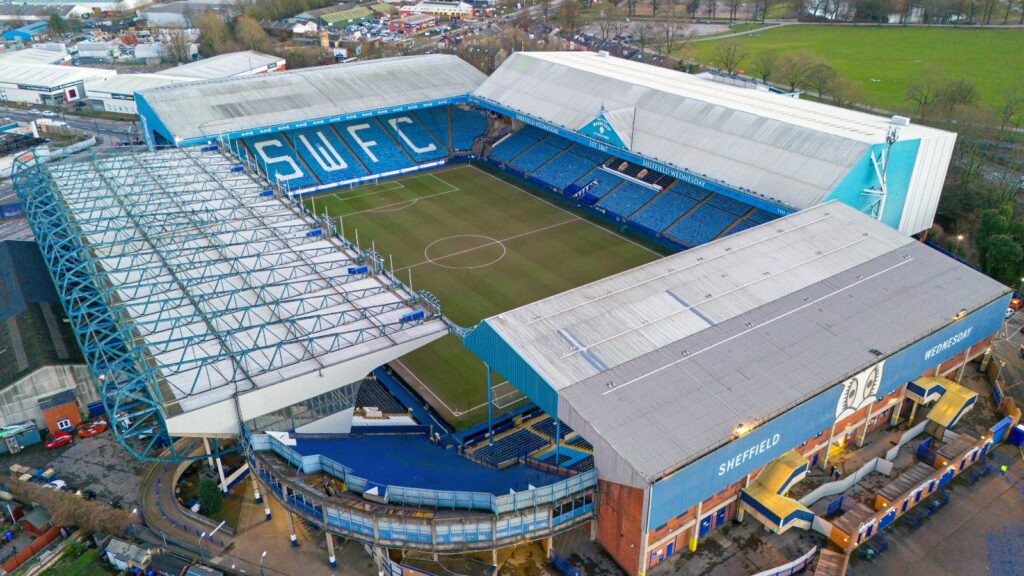
On Sunday, Sheffield Wednesday F.C.’s (Wednesday) relegation was sadly confirmed, the earliest relegation in English Football League history, a record no supporter would ever want their club to hold.
Wednesday, currently in administration, have suffered points deductions totaling 18 points:
- 12 points for entering administration
- 6 points for breaching EFL payment regulations
Many supporters understandably argue that points deductions punish fans for decisions they did not make. The emotional impact is real. But it is important to separate cause from consequence.
Wednesday fans were already suffering last summer, if not before, when the private owner chose to withdraw the funding required to operate as a competitive Championship club and, among other things, failed to pay staff and players on time. That decision, not the enforcement of league rules, set the trajectory. The EFL did not invent new sanctions mid-season, it applied regulations that member clubs themselves have agreed upon.
Why the administration rule exists
The automatic administration deduction was introduced in the 2004–05 season. Its origins lie in the early 2000s, when several clubs, including Leicester, Ipswich and Notts County, entered administration. At the time, there was growing concern that administration was becoming a financial strategy rather than a genuine last resort. Clubs could shed debt and reset financially without suffering competitive consequences.
The introduction of a mandatory points deduction was designed to protect competitive integrity. Without it, insolvency risked becoming a tactical tool.
Further safeguards were later added, including requirements that “football debts” be paid in full and minimum creditor repayment thresholds be met, with additional sanctions where those standards are not satisfied.
These measures were not created to punish supporters; they were introduced to prevent systemic damage to the league and its competition.
The wider competitive issue
Football’s financial ecosystem is fragile. Many clubs overspend attempting to climb the economic cliff edge of the Premier League. When spending breaches regulations, or when owners fail to meet the financial obligations, they themselves have created, sanctions follow.
Point deductions feel harsh because they affect results on the pitch. But the alternatives are limited:
- Fines weaken already unstable clubs and may ultimately threaten the club’s very existence. Or worse an owner is happy to pay fines for a competitive advantage.
- Transfer embargoes may not reflect the scale of the breach or its impact on other clubs.
- Suspended penalties risk lacking deterrent value.
If overspending or administration carried no sporting consequence, it would encourage others to follow. Those risks creating a cycle of financial escalation, what might reasonably be described as financial doping, where competitive balance is distorted by unsustainable spending.
Clubs that operate within the rules would be disadvantaged. Promotions, play-off places and key player signings could all be influenced by rule breaches that carried no meaningful sanction.
Then, as we have seen of late, such owners, often, suddenly decide their time is up leaving the Club in financial ruins, a mess the fans have to endure, worried about the very existence of their Club.
This has been all too common of late and in my view, the first step to remove such risk, and points deductions, is to reduce the financial divide between the EFL and the Premier League. Competition is critical, but it should not carry the existential threat to a club that the current financial disparity potentially creates. The desperation to achieve promotion fuels financial risk-taking that can destabilise clubs.
The Role of the Independent Regulator
The Independent Football Regulator introduces a new dimension to football governance. Its aim, amongst other things, is to improve financial sustainability and oversight.
However, it will not control league competition rules such as point deductions. Those remain within the authority of the EFL and its member clubs.
If EFL clubs wished, they could design alternative financial frameworks, even profit requirements, but enforcement of sporting sanctions would still sit with the league, not the regulator.
Where Responsibility Lies
Points deductions unquestionably hurt fans. Seeing Sheffield Wednesday relegated in February is painful for the club, its supporters and the league.It is not a good look in the short term.
But responsibility ultimately rests with ownership decisions that placed the club in breach of regulations. The EFL’s role is to enforce rules agreed collectively by its members. Removing sporting consequences would not protect supporters in the long term; it would risk greater instability and wider competitive harm.
Financial misconduct affects every club in the division. When one club operates outside agreed limits, others may lose out; on players, on revenue, on promotion opportunities.
Points deductions are blunt instruments. They are unpopular. But at present, they remain the clearest and most practical mechanism for protecting competitive integrity in a financially volatile environment.
You can read more about Steve Kavanagh and the work he does at gunnercookeSport here.
To receive all the latest insights from gunnercooke to your inbox, sign up below