- People
- Expertise
Our expertise
We are a team of more than 600 professionals, with the depth of experience which makes us genuine experts in our fields. Together, gunnercooke’s people have strength across just about every corporate discipline and sector. We provide legal, commercial and strategic advice that delivers real value to the clients we work with, which span from multinational enterprises through to not-for-profit organisations. Our breadth of expertise also covers specialist and emerging disciplines charity, crypto, sports and competition law.
Search by practice areaDispute ResolutionDispute Resolution OverviewMeet the Dispute Resolution TeamIntellectual Property DisputesFinancial Services & FinTech OverviewProceeds of CrimeEmployment TribunalTax InvestigationProperty Dispute ResolutionInsolvency DisputesMediationCivil Fraud & Asset TracingHealth & SafetyBusiness Crime & InvestigationsLitigation & ArbitrationInternational Arbitration - International
International Offices
The gunnercooke group has 16 main global offices across England, Scotland, the US, Germany and Austria, with further plans for growth in the coming years. These offices enhance the existing in-house capability of our dedicated international teams and dual-qualified experts that cover Spain, France, Italy, Portugal, Brazil, China, India, Poland and Hungary. Our team have clients across 126 jurisdictions, speak 46 languages and are dual-qualified in 22 jurisdictions. Our expertise means we can offer large teams to carry out complex cross-border matters for major international clients.
- Our story
Our story
gunnercooke is a top commercial law firm. We comprise a rapidly growing number of experts spanning legal and other disciplines. Clients benefit from flexible options on fees to suit their needs, access to a wider network of senior experts throughout the relationship, and legal advice which is complemented by an understanding of the commercial aspects of running a business.
- Reading Room
- News & Insights
Part 1: war risk clauses, safe port obligations and deviation
Introduction
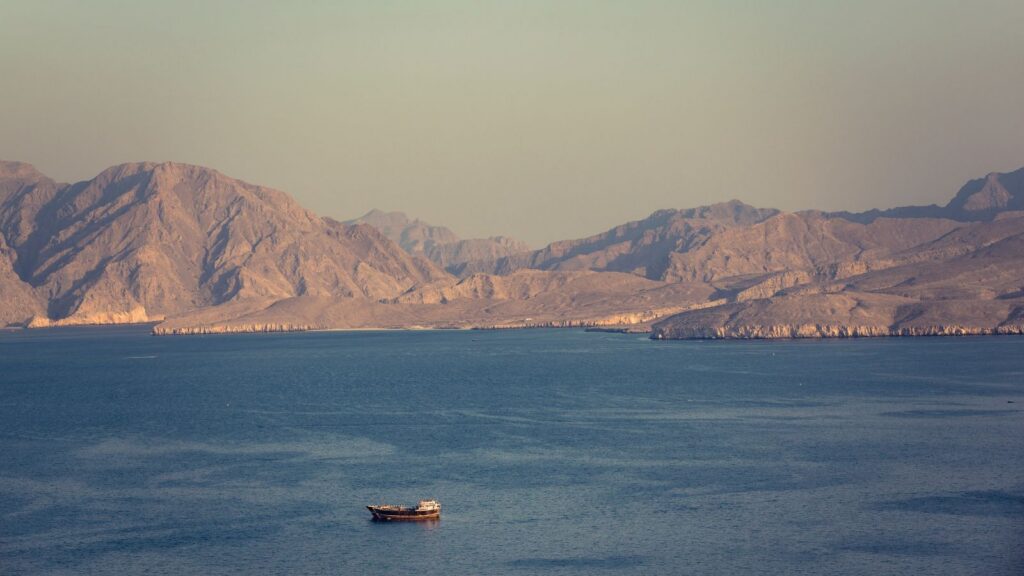
The Strait of Hormuz has been engulfed in geopolitical and economic disruption since 28 February 2026, following joint military strikes by the United States and Israel on Iran, which included the killing of Iran’s Supreme Leader Ali Khamenei. Iran’s Islamic Revolutionary Guard Corps (IRGC) issued warnings prohibiting vessel passage through the Strait, causing tanker traffic to drop by approximately 70% before falling to near zero. The US and Iran have now agreed to a conditional two-week ceasefire that includes the reopening of the waterway. However, the ceasefire remains fragile and its terms contested. For shipping professionals, the critical question is not simply whether the Strait re-opens, but what legal framework governs the position of owners, charterers, and cargo interests during (and after) this period of acute disruption.
This article examines the application of war risk clauses, safe port obligations, and the right to deviate under English law.
Background
The Strait is 21 miles wide at its narrowest point and facilitates the transit of around 20 million barrels of oil per day, roughly 20% of global seaborne oil trade. By 12 March 2026, Iran had made 21 confirmed attacks on merchant ships, and on 27 March the IRGC announced the closure of the Strait to any vessel going “to and from” the ports of the US, Israel, and their allies. According to an IMO tally at March-end, approximately 800 ships are trapped in the Persian Gulf with around 20,000 civilian seafarers facing dwindling supplies, fatigue, and psychological stress. Even with a ceasefire in place, full resumption of energy production could take months given damage to regional infrastructure.
War risk clauses: owners’ rights to refuse employment orders
The first major legal issue is the operation of war risk clauses in charterparties. Under BIMCO CONWARTIME and VOYWAR 2025, owners may be contractually justified in refusing orders to proceed to the region. These clauses entitle owners to refuse orders if, in the “Master’s reasonable judgement”, the vessel may be exposed to war risks — a right that applies “regardless of whether the relevant risk existed when the charterparty was concluded or arose only thereafter.”
The threshold for invoking such clauses under English law is assessed objectively against the facts known at the time the order is given. Given the scale of confirmed attacks, IRGC threats, and the JMIC’s “critical” risk rating, there is a strong basis for owners to argue that the threshold is met. However, this area of law is fact-sensitive: the precise contractual wording incorporated into the relevant charterparty is critical, and specific legal advice should be sought.
Safe port obligations
Under English law, a charterer’s obligation to nominate a “safe port” is a well-established implied and express term. The classic formulation holds that a port is safe if a vessel can reach it, use it, and depart from it without exposure to dangers that cannot be avoided by good navigation and seamanship.
A port may be deemed legally unsafe if the only approach is blocked by military force or credible threats of seizure or attack. Consequently, ports within the Persian Gulf, the approaches to which necessarily involve transit through or near the Strait, may currently be characterised as unsafe. Under voyage charters, the obligation may shift to proceeding only “as near as the vessel may safely get.” Owners should document all relevant intelligence, authority advisories, and market assessments to support any refusal to proceed, and communicate any such refusal promptly, clearly, and in writing.
Deviation: The right to reroute
With unequivocal threats from Iranian military forces and confirmed attacks resulting in casualties, many operators are opting to deviate around the Cape of Good Hope. Under the Hague-Visby Rules, as incorporated into English law by the Carriage of Goods by Sea Act 1971, a carrier is permitted to deviate where it is reasonable to do so to save life or property, or where deviation is otherwise reasonable. Assessed against the current situation, characterised by direct military threats and confirmed attacks, rerouting through an alternative passage would be difficult to characterise as unreasonable.
In the absence of an express liberty clause redefining the contractual route, carriers have an implied right, and obligation, to deviate for the safety of vessel, crew, and cargo. However, an unreasonable deviation can have severe consequences, including loss of contractual rights and P&I cover. An important distinction also applies between deviation during carriage under a bill of lading and voyage reconfiguration under a charterparty, as the legal standards and contractual protections governing these scenarios may diverge. Where war risk or liberty clauses in a charterparty have not been validly incorporated into the bill of lading, the carrier’s position towards bill of lading holders may not align with its position vis-à-vis charterers.
Practical Steps
Owners and operators should take the following steps immediately:
- Review all charterparty terms, with particular attention to war risk, liberty, and safe port provisions, and confirm whether the relevant BIMCO 2025 wording has been incorporated.
- Review bills of lading to confirm whether charterparty terms have been properly incorporated vis-à-vis third-party cargo interests.
- Document all decisions meticulously, including risk assessments, communications, and deviation notices, which will be critical evidence in any dispute.
- Engage with P&I clubs and war risk insurers immediately, before making any operational decisions, to preserve coverage.
- Monitor official advisories from UKMTO and JMIC closely, given the current “critical” risk rating indicating further attacks are “almost certain.”
Conclusion
The ceasefire, while welcome, does not resolve the underlying legal complexity. Owners, charterers, and cargo interests must treat this period not as a return to normality, but as a window in which to reassess contractual positions, preserve legal rights, and prepare for continuing volatility. The interaction between BIMCO 2025 wording and English common law principles is evolving in real time. Early legal advice is essential.
This article is for general information purposes only and does not constitute legal advice. Should readers wish to seek specific legal advice, please contact Andre Yeghiazarian here.
To receive all the latest insights from gunnercooke to your inbox, sign up below