- People
- Expertise
Our expertise
We are a team of more than 600 professionals, with the depth of experience which makes us genuine experts in our fields. Together, gunnercooke’s people have strength across just about every corporate discipline and sector. We provide legal, commercial and strategic advice that delivers real value to the clients we work with, which span from multinational enterprises through to not-for-profit organisations. Our breadth of expertise also covers specialist and emerging disciplines charity, crypto, sports and competition law.
Search by practice areaDispute ResolutionDispute Resolution OverviewMeet the Dispute Resolution TeamIntellectual Property DisputesFinancial Services & FinTech OverviewProceeds of CrimeEmployment TribunalTax InvestigationProperty Dispute ResolutionInsolvency DisputesMediationCivil Fraud & Asset TracingHealth & SafetyBusiness Crime & InvestigationsLitigation & ArbitrationInternational Arbitration - International
International Offices
The gunnercooke group has 16 main global offices across England, Scotland, the US, Germany and Austria, with further plans for growth in the coming years. These offices enhance the existing in-house capability of our dedicated international teams and dual-qualified experts that cover Spain, France, Italy, Portugal, Brazil, China, India, Poland and Hungary. Our team have clients across 126 jurisdictions, speak 46 languages and are dual-qualified in 22 jurisdictions. Our expertise means we can offer large teams to carry out complex cross-border matters for major international clients.
- Our story
Our story
gunnercooke is a top commercial law firm. We comprise a rapidly growing number of experts spanning legal and other disciplines. Clients benefit from flexible options on fees to suit their needs, access to a wider network of senior experts throughout the relationship, and legal advice which is complemented by an understanding of the commercial aspects of running a business.
- Reading Room
- News & Insights
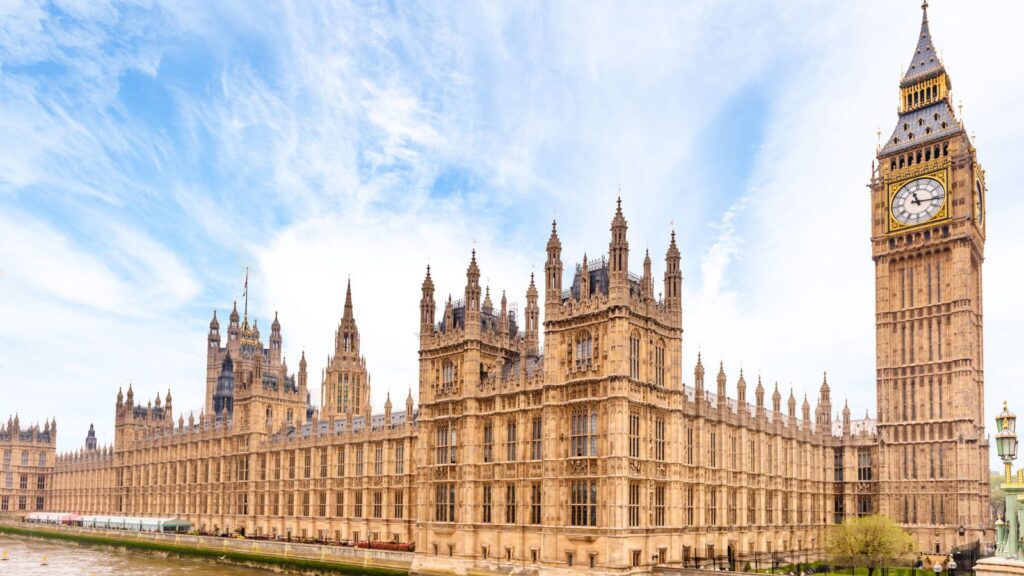
Burnham’s first Budget: gunnercooke’s experts comment on what changes and what to do next
In today’s Autumn Budget, Chancellor of the Exchequer John Healey backed founders and scale-ups with a new Founders Relief and a more generous EMI scheme, changed the capital allowances rules, and committed investment in energy, infrastructure and regional growth.
The first budget of Andy Burnham’s premiership also reversed the planned cash ISA cuts, confirmed a new Pension Tax Allowance for low-income pensioners and reformed the State Pension triple lock from 2030, with no further inheritance tax changes this time.
With the government’s focus on growth, investment and entrepreneurship, the 2026 Budget has real implications for individuals and businesses alike.
gunnercooke’s lawyers and advisors share their expert insights on what the announcements mean for clients across a range of sectors including construction, real estate, startups and scale-ups, pensions and corporate.
Parminder Latimer, Pensions Partner at gunnercooke:
The Chancellor confirmed a few anticipated measures affecting pensioners and their beneficiaries: a new Pension Tax Allowance (previously announced in the 2025 Budget and to be introduced in the Finance Bill 2026/27), designed to keep low-income pensioners out of the income tax system; highly controversial and long awaited reform of the State Pension triple lock from 2030, and a change to the tax treatment of pension death benefits that takes effect immediately.
The government will remove the two-year rule so that beneficiaries will no longer be taxable because tax-free pension and lump sum death benefits are paid more than two years after the member’s death. The Budget document said the change will apply to any pension and lump sum death benefit payments made on or after 28 October 2026, regardless of when the member died.
The government also confirmed it will make changes to the way tax is assessed and collected where a deceased member’s lump sum death benefit allowance has been exceeded to provide greater certainty to individual beneficiaries.
From April 2027, the full State Pension under the triple lock would otherwise push pensioners whose total income is up to the value of the full State Pension above the frozen £12,570 personal allowance for the first time. The new allowance raises the tax-free threshold for this group to £13,036 and is expected to rise broadly in line with State Pension increases for the remainder of this Parliament.
This is a welcome fix to a problem that has been building for several years as the State Pension has risen faster than the frozen personal allowance. However, it only protects pensioners whose income does not exceed the value of the new full State Pension. Anyone with even modest additional income, from a small workplace pension, savings, or part-time work, will not benefit from this allowance and will continue to be taxed in the ordinary way once their total income exceeds £12,570. That creates a sharp cliff edge, and as the gap between the State Pension and the frozen personal allowance widens in future years, more pensioners are likely to find themselves caught on the wrong side of that line.
The Chancellor also confirmed that the triple lock will be adjusted from 2030 so that the State Pension continues to rise in line with earnings and inflation, rather than the current formula of the highest of earnings, inflation or 2.5%, linking this directly to funding the new National Care Service.
Pension savers will also be relieved that the Chancellor did not reduce the maximum tax-free lump sum that can be drawn from a pension, which remains at £268,275.
As previously announced, from 6 April 2027, the government is removing the opportunity for individuals to use pensions as a vehicle for Inheritance Tax planning by bringing unspent pension pots within the scope of IHT.
Also as previously announced, from 2029, the government is capping the amount that can be sacrificed into a pension without paying National Insurance Contributions at £2,000 per employee: employees who contribute up to £2,000 a year via salary sacrifice are unaffected, with employee and employer NICs applying only to the amount sacrificed above £2,000.
There’s work still to be carried out: trustees, administrators and personal representatives should continue preparing for unspent pension funds and relevant death benefits to form part of a member’s estate for IHT purposes from 6 April 2027, while employers operating salary sacrifice arrangements have just over two years, until 2029, to review scheme design, payroll systems and employee communications ahead of the £2,000 NICs cap taking effect.
Angelo Chirulli, Operating Partner, International & Corporate Tax at gunnercooke:
The Budget’s capital allowances package will affect companies differently, depending on their investment plans and existing asset pools.
The main-rate first-year allowance will increase from 40% to 50% for qualifying expenditure incurred from 1 January 2027. However, the main-pool writing-down allowance will fall from 14% to 12% from 1 April 2027 for corporation tax.
The higher initial allowance is welcome where expenditure is not already fully relieved through full expensing or the Annual Investment Allowance. Meanwhile, companies with substantial existing pool balances will recover expenditure more slowly, potentially increasing near-term tax payments.
The Treasury forecasts that the combined package will raise revenue overall. The practical effect therefore extends beyond the unchanged headline corporation tax rate.
Businesses should model both measures across existing assets and planned expenditure. Their combined impact will depend on eligibility for relief and when the resulting deductions can reduce tax payments.
Sophie Thornley, Construction Partner at gunnercooke:
For the construction industry, today’s Budget offered some significant opportunities, particularly in energy, infrastructure and regional development.
The Chancellor’s observation that new developments cannot connect to the electricity grid without the necessary infrastructure highlights one of the industry’s biggest challenges. Investment in renewable energy generation must be matched by investment in transmission networks, substations and grid connections. Without that, even commercially viable developments risk remaining stalled.
The proposed investment in Rolls-Royce turbine technology also presents opportunities for specialist engineering, manufacturing and associated construction infrastructure. Similarly, the ‘new Data Centre Covenant’ for data centres recognises the importance of digital infrastructure to economic growth. However, data centres are particularly energy intensive, and grid capacity remains a major obstacle. Greater certainty around connections will be essential if investment is to translate into construction activity.
Transport infrastructure also features, with the Bakerloo line extension illustrating the potential for major construction opportunities arising from increased regional investment powers.
Perhaps one of the most interesting developments is the continued shift towards devolution. Giving regional authorities greater control over funding and infrastructure priorities could help accelerate decision-making and allow housing, transport and commercial development to be planned together, rather than in isolation.
This is particularly relevant in my home city, Cambridge. The Greater Cambridge Development Corporation (supported by up to £400 million of previously announced initial funding) has the potential to unlock substantial housing, commercial and infrastructure development. Combined with further investment opportunities, this could create a significant pipeline of construction work, particularly in the life sciences sector. However, the region’s longstanding constraints around water availability, transport and utilities will need to be addressed.
For the construction industry, the opportunities are clear. But there are challenges too. Skills shortages, supply chain capacity, rising costs and increasingly onerous contractual risk allocation continue to threaten project viability. From a construction lawyer’s perspective, the importance of realistic programmes, appropriate risk allocation and robust but fair contractual arrangements cannot be overstated. Public investment may unlock projects, but contractors and their supply chains must be able to deliver them profitably.
Jason Lewis, Real Estate Finance Partner at gunnercooke:
The Budget’s proposed extension of Small Business Rates Relief (England only), lifting the rateable-value threshold from £12,000 to £18,000, is welcome for eligible smaller shops, restaurants and leisure occupiers. For landlords, healthier tenant finances may mean fewer failures and voids, but the benefit is not universal: eligibility and the final rules will matter.
The Chancellor also announced an increase in Machine Games Duty from 20% to 25% for higher-stakes machines, while excluding adult gaming centres and vape shops from business rates relief. This distinction between high-street occupiers has implications for both operators and landlords when assessing covenant strength, lettings and future investment.
On residential property, the previously announced Your First Home scheme may support demand for new-build housing, but incentives will achieve little unless developers can overcome construction costs, planning delays and infrastructure constraints. Individual landlords also face a previously announced two-percentage-point increase in income tax on property income from April 2027, with an equivalent increase for savings income, putting further pressure on post-tax returns.
The real test is whether these measures strengthen occupiers and turn planned developments into viable projects.
Jasvinder Rai, Operating Partner, Employment Taxes at gunnercooke:
Business drivers who cover long distances will benefit from a higher tax-free mileage rate following today’s Budget. The rate for business miles above 10,000 a year will rise from 25p to 35p per mile following a government review. The 55p rate for the first 10,000 miles, introduced in May, remains in place for employees and the self-employed.
Together with the increase to 55p earlier this year, this is the most significant change to approved mileage rates in 15 years and is aimed at supporting workers who rely heavily on their vehicles for business travel.
The higher rate for additional mileage is expected to particularly benefit sales professionals, consultants and other workers who regularly undertake long-distance journeys as part of their role.
The measure reflects rising motoring costs and provides greater tax-efficient reimbursement opportunities for employers while increasing support for employees and the self-employed who drive significant business mileage.
Aaron Scrupps, Operating Partner, Accounting, Finance & Tax at gunnercooke:
The 2026 Budget is firmly pro-startup and pro-scale-up, which our venture-backed clients will welcome. The Chancellor presented founders as genuine risk-takers who should be rewarded for building in Britain and encouraged to reinvest here.
The headline measure for this group is Founders Relief, a proposed 10% CGT rate on up to £10 million of lifetime gains from April 2027. It reads as a direct answer to the BADR reforms of recent years, which raised the rate from 10% to 18% and caused real frustration among founders and business owners. However, the new relief is aimed at qualifying founders of high-growth, innovative companies, with the detailed design still subject to consultation. Other business owners (including non-founders) face a cut in the BADR lifetime limit from £1 million to £500,000 from April 2027. The Budget therefore deliberately emphasises high-growth entrepreneurship rather than uniform relief for every business owner.
Alongside this, CSOP is being relaunched as “EMI2”, aimed at companies that have outgrown EMI or don’t qualify for it. The individual limit doubles from £60,000 to £120,000, and it will no longer count towards an employee’s EMI limit, so the two can be stacked. We often see scale-ups hit the EMI per-employee cap when incentivising a senior hire and fall back on unapproved options that are far less attractive. Stacking EMI and EMI2 lets scale-ups offer bigger tax-advantaged stakes to senior hires at later stages of growth, helping them compete with the scale of equity packages offered by US rivals and keep key people through to exit.
Beyond tax, another significant signal for scale-ups is the additional £20.4 billion for the National Wealth Fund and British Business Bank, including £1.4 billion for equity funds backing high-growth businesses and a new £450 million venture debt product. Their real value will depend on how quickly capital is deployed and on what terms.
Amy Lane, Wills, Estates and Tax Planning Partner at gunnercooke:
Following the significant changes announced by Rachel Reeves in November 2025, I am pleased to see that further Inheritance Tax changes were absent from today’s Budget. Many clients are continuing to deal with the ramifications of the previous announcements which significantly affected business owners and farmers, with the next tranche of changes applicable to pensions coming into force from April 2027.
The simplification of the ISA rules, compared with those announced in November 2025, will be welcomed by many. The limit will remain at £20,000 per year, tax free, regardless of age.
The ‘Bank of Mum and Dad’ remains a topic of conversation for many of our clients and featured in today’s Budget. For some clients, this has extended to the ‘Bank of Grandparents’. This is particularly relevant in London and the surrounding regions, where property prices have increased substantially. It will be interesting to see whether there are any penalties introduced if you use the First-Time Buyers ISA in tandem with gifted amounts from family members.
As Budgets go, the changes announced today will have far fewer ripples than the November 2025 Budget, although it will not go unnoticed that the detrimental impact on the succession of businesses and farms was not addressed today, despite many hoping it would be.
Media enquiries: gunnercooke’s experts are available for further comment on the Budget. Please contact [email protected].
To receive all the latest insights from gunnercooke to your inbox, sign up below