- People
- Expertise
Our expertise
We are a team of more than 600 professionals, with the depth of experience which makes us genuine experts in our fields. Together, gunnercooke’s people have strength across just about every corporate discipline and sector. We provide legal, commercial and strategic advice that delivers real value to the clients we work with, which span from multinational enterprises through to not-for-profit organisations. Our breadth of expertise also covers specialist and emerging disciplines charity, crypto, sports and competition law.
Search by practice areaDispute ResolutionDispute Resolution OverviewMeet the Dispute Resolution TeamIntellectual Property DisputesFinancial Services & FinTech OverviewProceeds of CrimeEmployment TribunalTax InvestigationProperty Dispute ResolutionInsolvency DisputesMediationCivil Fraud & Asset TracingHealth & SafetyBusiness Crime & InvestigationsLitigation & ArbitrationInternational Arbitration - International
International Offices
The gunnercooke group has 16 main global offices across England, Scotland, the US, Germany and Austria, with further plans for growth in the coming years. These offices enhance the existing in-house capability of our dedicated international teams and dual-qualified experts that cover Spain, France, Italy, Portugal, Brazil, China, India, Poland and Hungary. Our team have clients across 126 jurisdictions, speak 46 languages and are dual-qualified in 22 jurisdictions. Our expertise means we can offer large teams to carry out complex cross-border matters for major international clients.
- Our story
Our story
gunnercooke is a top commercial law firm. We comprise a rapidly growing number of experts spanning legal and other disciplines. Clients benefit from flexible options on fees to suit their needs, access to a wider network of senior experts throughout the relationship, and legal advice which is complemented by an understanding of the commercial aspects of running a business.
- Reading Room
- News & Insights
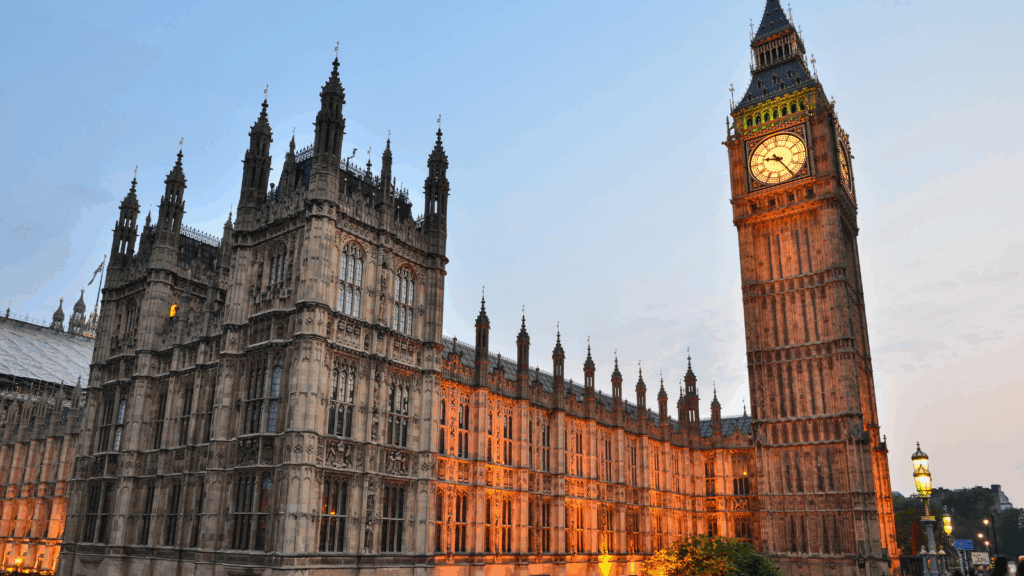
Budget Breakdown: gunnercooke lawyers digest what the 2025 Autumn Budget really means for businesses
In the Autumn Budget delivered today in the House of Commons, Chancellor of the Exchequer Rachel Reeves set out the government’s updated plans for the UK economy.
Her statement outlined significant changes to taxation and public spending, covering areas such as pensions, personal tax, inheritance tax, business tax, electric vehicle tax, property tax, and the minimum wage.
Aimed at driving sustained economic growth and increasing productivity across the country, the 2025 Budget raises important questions for individuals and businesses alike.
gunnercooke’s lawyers and advisors share their expert insights on what these measures mean for clients across sectors.
Parminder Latimer, Pension Partner:
“Today, the Chancellor announced that salary-sacrifice pension contributions above an annual £2,000 threshold will no longer be exempt from National Insurance, a change that will come into force from April 2029. How will this impact both employees and employers?
Impact for employees:
“The change will lead to a reduction in take-home pay for millions who are saving into a workplace pension, with the greatest impact on those earning less than £50,284 per year. The National Insurance savings under a salary sacrifice arrangement encourage employees to contribute in excess of the auto-enrolment thresholds. These thresholds are already set too low to save for a comfortable retirement, and the arrangement encourages pension savings at a time when there is a pensions savings crisis.”
Impact for employers:
“The change will add to employer costs when costs for all employers across all industries are already spiralling, particularly following the National Insurance hike in April 2025. The National Insurance savings under salary sacrifice arrangements are key to counteracting that hike. The cap will undermine the significant role employers play in facilitating workplace pension savings and continue to undermine that role.”
“Additionally, it was confirmed that the Pension Protection Fund and Financial Assistance Scheme will receive inflation proofing on pre-1997 uplifts, while State Pensions are set to rise by 4.8%, with small amounts becoming tax-free for state pensioners from April 2027.
“Also, access to Class 2 National Insurance contributions will be abolished for people living abroad, closing a loophole that previously allowed overseas individuals to build entitlement to the UK State Pension. Finally, the British Coal Staff Superannuation Scheme has been granted permission to return an investment reserve of £2.3 billion to fund pension bonuses for its members, following extensive lobbying from members, trustees, and MPs.”
Richard Linskell, Employment Partner:
“The biggest announcement is the government confirmation of the already-announced increase in the National Living Wage from April 2026 as follows:
- Eligible workers aged 21 and over on the National Living Wage will receive £12.71 an hour, up from £12.21
- If you are aged 18, 19 or 20, the National Minimum Wage increase to £10.85 an hour, up from £10
- For those aged 16 or 17, the minimum wage will rise to £8 an hour, up from £7.5.
- The separate apprentice rate which applies to eligible people under 19 – or those over 19 in the first year of an apprenticeship – will also increase to £8 an hour, from £7.55.
“There is also the change to National Insurance on pension salary sacrifice schemes referred to in the pension summary above.
“Getting to work will cost less due to the freeze on rail fares and the continuing freeze on fuel duty.
“The big issue remains the Employment Rights Bill for which 26 (yes, 26!) consultations were announced this week by Business Secretary, Peter Kyle. Whether these will lead to a softening or delay in the proposals remains to be seen.”
Amy Lane, Private Client Partner:
“I’m pleased to hear that the work done on the infected blood scheme has been recognised. All payments from the scheme will now be exempt from Inheritance Tax, which I know STEP and Jade Gani have been working on tirelessly.
“It’s disappointing to see the issues regarding the farm tax completely ignored, especially given the energy to raise awareness by farmers. This is shortsighted. That being said, the new £1m threshold for agricultural relief / business relief will now be transferrable between spouses, which helps solve some of the planning issues for our clients.
Tom Goff, Venture Capital Partner:
“The British tech community will be relieved that an exit tax was not implemented today.
“However, a broad range of reforms will see payroll costs increase in real terms over the course of this Parliament and beyond. Today’s announcements on national insurance, income tax, salary sacrifice, and dividends look to present extra headaches for innovators who are considering investing in job creation and growth in the UK. Entrepreneurs may also be questioning Britian’s pro-innovation credentials in light of the new tax on electric vehicles.
“One silver lining is that the UK’s tax-advantaged investment schemes (the Enterprise Investment Scheme, Seed Enterprise Investment Scheme and Venture Capital Trusts) look set to become even more attractive to more people. The British tech community will be pleased to hear the Chancellor’s intention to widen eligibility of these schemes soon. “
Angelo Chirulli, Operating Partner, Tax:
“The Budget 2025 sets out a further recalibration of how income from assets is taxed. According to the Budget and policy paper on changes to tax rates for property, savings and dividend income, the main dividend tax rates are due to increase by 2% from April 2026. From April 2027, new rates for property and savings income are scheduled at 22%, 42% and 47%, with finance cost relief for individual landlords given at the 22% property basic rate. These measures sit alongside a freeze of the main income tax thresholds and new higher bands for council tax on high-value properties, so the cumulative effect will build gradually over several years rather than in a single step.
“For larger corporates and internationally mobile HNW families, these changes do not necessarily require immediate restructuring, but they do justify closer monitoring. The overall impact will depend on each taxpayer’s mix of employment income, dividends, rental income, and investment returns, and on how these new rates interact with existing planning, including FIG/non-dom changes and group financing structures. We expect more clients to review whether UK or overseas vehicles are the most appropriate holders of investment property and portfolios, to re-run after-tax yield and cash-flow models, and to revisit long-term UK residence and holding strategies as the new rules are phased in.”
David McIntyre, Operating Partner, Finance:
“Following the national insurance and minimum wage increases applied in April this year and the expectation of tax increases in this budget, businesses were bracing themselves for some difficult announcements today.
“However, with tax increases focused elsewhere, there have been modest changes which will affect UK business directly. Business leaders will be hoping that the overall raft of measures in the budget will be well received by the markets.
“In a pre-budget announcement on Tuesday, the Chancellor confirmed one notable change, being an increase in the minimum wage rates from April 2026. This represented an increase of around 4% for adults, but higher increases of up to 9% for younger people and apprentices. On the back of the increases in April 2025, there are concerns that these rises could result in hiring freezes or job cuts and could stifle growth.
“More positively, the chancellor announced some changes to the Enterprise Management Incentive (EMI) schemes and to capital allowances, to encourage investment in new and scale-up businesses. It was also announced that funding for apprenticeship training will increase to 100% for Small and Medium Sized Enterprises.”
Douglas Strattion, Operating Partner, Tax:
“Aside from the widely anticipated threshold freezes, the headline announcement was the raising of tax rates on property, savings, and dividend income. Tax on dividend income will increase by 2% at the ordinary rate (from 8.75% to 10.75%) and the upper rate (from 33.75% to 35.75%). The additional rate will remain 39.35%. Tax on savings and property income will increase by 2% across all bands, to 22%, 42% and 47%. All of these changes will come into effect from April 2027.”
Jasvinder Rai, Operating Partner, Tax:
“Today the Chancellor has pushed ahead with plans for an Electric Vehicle pay-per-mile tax. From April 2028, the EV charge will be set at 3p per mile for battery electric cars and 1.5p per mile for plug in hybrid cars. This means the average driver of a battery electric vehicle driving 8,500 miles will be charged £255. The charge will be levied in addition to the current vehicle excise duty charges that were introduced in April 2025 on electric vehicles (and the Expensive Car Supplement).
“In October 2025, given that 73% of all new electric cars were bought by businesses or for fleets, employers will need to revisit their car arrangements and update policies and communications to employees. It will create additional costs for businesses especially those with essential company car drivers that do not want employees to foot the additional cost.
“It will also be interesting to see whether this charge puts off drivers who are considering making the switch to electric cars by layering in new costs. In addition, the changes announced last year to bring Employee Car Ownership Schemes into the scope of the Benefit in Kind rules from 6 April 2026 will be delayed until April 2030.”
Neeraj Nagarkatti, Associate Operating Partner, Tax:
Multinational corporate groups with a UK presence
Corporate tax and capital allowances:
“The corporation tax rate remains at 25%. From April 2026 a 40% first-year allowance will apply to qualifying expenditure, while the main-pool writing-down rate falls to 14%. These shifts will influence investment timing, leasing choices, and post-tax modelling.”
Pillar Two and cross-border rules:
“Updates to the Multinational and Domestic Top-up Taxes bring the UK into line with OECD guidance issued in early 2025. The International Controlled Transaction Schedule from 2027, together with revised transfer pricing, permanent establishment and Diverted Profits Tax rules from 1 January 2026, raises disclosure standards and governance expectations.”
Customs, VAT, and carbon:
“Low-value consignment relief is withdrawn by 2029. The UK CBAM applies from 1 January 2027. Mandatory electronic VAT invoicing from April 2029 will require coordinated systems and supply-chain preparation.”
Crypto and Web3 businesses
Reporting and tax treatment:
“The Cryptoasset Reporting Framework takes effect on 1 January 2026 with reporting due in 2027. Work continues on the taxation of DeFi activity, so platforms should prepare for full KYC, aligned reporting and appropriate VAT treatment.”
For updates from the gunnercooke team straight to your inbox every month, sign up to our newsletter here.
To receive all the latest insights from gunnercooke to your inbox, sign up below