- People
- Expertise
Our expertise
We are a team of more than 600 professionals, with the depth of experience which makes us genuine experts in our fields. Together, gunnercooke’s people have strength across just about every corporate discipline and sector. We provide legal, commercial and strategic advice that delivers real value to the clients we work with, which span from multinational enterprises through to not-for-profit organisations. Our breadth of expertise also covers specialist and emerging disciplines charity, crypto, sports and competition law.
Search by practice areaDispute ResolutionDispute Resolution OverviewMeet the Dispute Resolution TeamIntellectual Property DisputesFinancial Services & FinTech OverviewProceeds of CrimeEmployment TribunalTax InvestigationProperty Dispute ResolutionInsolvency DisputesMediationCivil Fraud & Asset TracingHealth & SafetyBusiness Crime & InvestigationsLitigation & ArbitrationInternational Arbitration - International
International Offices
The gunnercooke group has 16 main global offices across England, Scotland, the US, Germany and Austria, with further plans for growth in the coming years. These offices enhance the existing in-house capability of our dedicated international teams and dual-qualified experts that cover Spain, France, Italy, Portugal, Brazil, China, India, Poland and Hungary. Our team have clients across 126 jurisdictions, speak 46 languages and are dual-qualified in 22 jurisdictions. Our expertise means we can offer large teams to carry out complex cross-border matters for major international clients.
- Our story
Our story
gunnercooke is a top commercial law firm. We comprise a rapidly growing number of experts spanning legal and other disciplines. Clients benefit from flexible options on fees to suit their needs, access to a wider network of senior experts throughout the relationship, and legal advice which is complemented by an understanding of the commercial aspects of running a business.
- Reading Room
- News & Insights
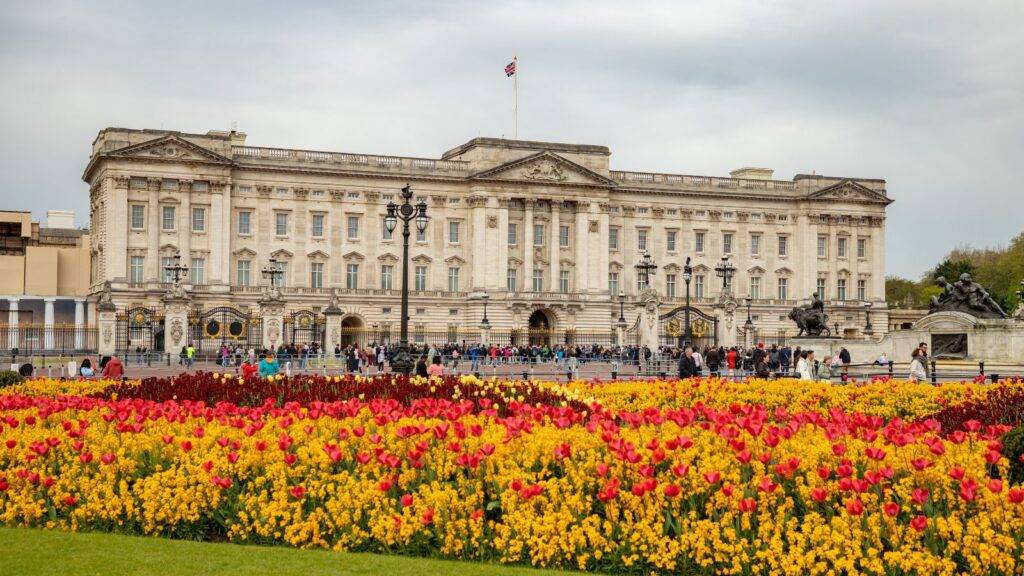
On 19th February 2026, Andrew Mountbatten-Windsor, formerly known as Prince Andrew, was arrested by Thames Valley Police at his home on the Sandringham Estate in Norfolk, on suspicion of misconduct in public office. This is a seminal moment in history – the first time in nearly four hundred years that a senior British royal has been arrested. The offence is one that many may never have heard of, yet it carries the most serious penalty in English criminal law, life imprisonment.
In this article criminal solicitor Siân Darlington looks at what the offence actually means and why this case may become one of the most legally significant in modern British history.
What is Misconduct in Public Office
Misconduct in public office is a common law offence, which means that it has been developed by the courts over centuries rather than being contained in an Act of Parliament. It can be tried only on indictment meaning any trial must take place in the Crown Court.
The offence is committed when:
- A public officer acting as such;
- Wilfully neglects to perform their duty and/or wilfully misconducts themselves;
- To such a degree as to amount to an abuse of the public’s trust in the office holder;
- Without reasonable excuse or justification.
“Wilful” means “deliberately doing something which is wrong knowing it to be wrong or with reckless indifference as to whether it is wrong or not. A careless error or a misjudgement is not enough.
But not every wilful neglect of duty or misconduct will be an offence. There is a high threshold of seriousness. The conduct must be so far below acceptable standards as to amount to an abuse of the public’s trust in the office holder.
In addition, there must be a close connection between the wilful neglect or misconduct and the power and/or authority vested in the suspect by virtue of their office. It is not enough that Andrew is/was a prominent public figure. Any prosecution must prove that the neglect or misconduct was made in his capacity as a public office holder exercising the duties of that office.
What are the specific allegations?
The Police had previously said they were considering investigating Andrew over allegations relating to his association with the late sex offender Jeffrey Epstein and were reviewing allegations he shared confidential material. Andrew served as the UK’s trade envoy between 2001 and 2011, a role which allowed him access to senior government and business contacts around the world. Any UK trade envoy owes a duty of confidentiality in respect of sensitive, commercial, or political information connected to their role.
The files released by the US government contained communications between Andrew and Epstein which are alleged to show that Andrew leaked sensitive information about the Royal Bank of Scotland and Aston Martin, as well as government reports from visits to Vietnam, Singapore and China to Epstein. Another email appeared to send Epstein a confidential brief on investment opportunities in the reconstruction of Helmand Province, Afghanistan.
It does not appear that the arrest relates to any allegations of sexual offences. Those allegations remain a separate matter. The Thames Valley Police investigation appears focused on what Andrew may have disclosed to Epstein whilst acting in his capacity as a UK trade envoy.
Previous examples of the offence in practice
A significant number of prosecutions for misconduct in public office have involved police officers. An officer was convicted in the 1970s of failing to intervene during a disturbance outside a nightclub in which a man was kicked to death. More recently another police officer was prosecuted after passing information from the Police National Computer to a criminal. A prison officer who passed information to journalists for payment was similarly convicted. A court clerk who accepted bribes to interfere with court processes also faced prosecution. The cases are not limited to those involved in the criminal justice system. A local authority housing officer was convicted after allocating housing dishonestly. In 2010 and 2011, several MPs prosecuted following the parliamentary expenses scandal were charged with misconduct in public office, alongside offences of fraud and false accounting.
There have also been some failed prosecutions, and it is clear that misconduct in public office is often charged as an “add on” to clearer statutory offences such as bribery, fraud and false accounting. The offence has been criticised as being over broad and uncertain. Following recommendations made by the Law Commission in 2020, the Public Office (Accountability) Bill 2025, widely known as the “Hillsborough Law”, was published on 16 September 2025. This abolishes the common law offence of misconduct in public office and replaces it with two new statutory offences of seriously improper conduct and breach of duty to prevent death or serious injury. It also introduces a third offence of misleading the public. It is not yet enshrined in law and does not contain any retrospective provisions so will not be of any application to Andrew’s situation.
The investigation next steps
It is understood that Andrew was released from police custody on the evening of 19th February, having been detained for around 11 hours in total. Police have confirmed he was “released under investigation.” This means that he is not subject to any bail conditions, such as a requirement to report or remain in the country, but the investigation remains live.
The investigation will undoubtedly take some time. Police confirmed that they had searched and seized material from various addresses in Berkshire and Norfolk. That material will need to be considered, including the forensic analysis of all seized devices. The police no doubt intend to examine communications between Andrew and Epstein disclosed in the US Department of Justice files, interview witnesses in the UK, the US, and potentially elsewhere, consider the documents released as part of the American investigation into Epstein and possibly liaise with the US authorities.
My experience of investigations involving large amounts of documentation, electronic data and an extra-terrestrial element is that they take years, not months. The high-profile nature of this case may mean a greater allocation of resources which will speed matters up, but it is safe to say there will be no imminent charging decision.
Will Andrew face trial?
Once the police investigation concludes, the Crown Prosecution Service (CPS) will review the material to decide whether the evidence meets the threshold for bringing any charges. The CPS applies a two-stage test. Firstly, is there a realistic prospect of conviction and secondly, is a prosecution in the public interest. If the CPS decided the test is satisfied, Andrew would face a first hearing in a Magistrates’ Court where the case would immediately be sent to the Crown Court for a trial (or, in the event that a guilty plea is entered, for a sentencing hearing).
The current Crown Court backlog makes any trial a distant prospect. The backlog currently stands at over 100,000 cases. The preparation required for a trial of this complexity and profile after charge would take several months. In realistic terms, it would be surprising if any trial took place before the end of this decade.
Likely penalty
While misconduct in public office carries a maximum sentence of life imprisonment, in practice, sentences vary enormously. There are no official “sentencing guidelines”, but past cases show the length of sentence will depend on various factors such as the gravity of the abuse, the period over which it occurred, and the consequences of it. Some offenders have received suspended or even non-custodial sentences. Typical custodial sentences in serious cases range from two to five years. However, the past stages do not involve any figure of such public prominence. In addition, cases where national security is engaged, or where abuse of office was persistent, are likely to attract significantly longer sentences.
The wider constitutional significance
Whatever the ultimate outcome, the events of 19th February 2026 mark an extraordinary moment in British constitutional and criminal history. The public status of Andrew is irrelevant. A core principle of our legal system is that everyone is equal before the law, and no one is above it. The offence of misconduct in public office exists precisely because those who hold public trust are held to a higher standard, and when they betray that trust, the consequences must be serious. As a criminal solicitor, I will be watching this case closely. It raises profound questions about accountability, the limits of official privilege, and the reach of the criminal law.
To receive all the latest insights from gunnercooke to your inbox, sign up below